Increase Your Productivity with Our AI-Enabled Tools for Clinical R&D
Our AI tools are designed to quickly create your study protocol framework, statistical analysis plan and data monitoring charter, so your team can focus on more strategic tasks such as maximizing your study success probability.
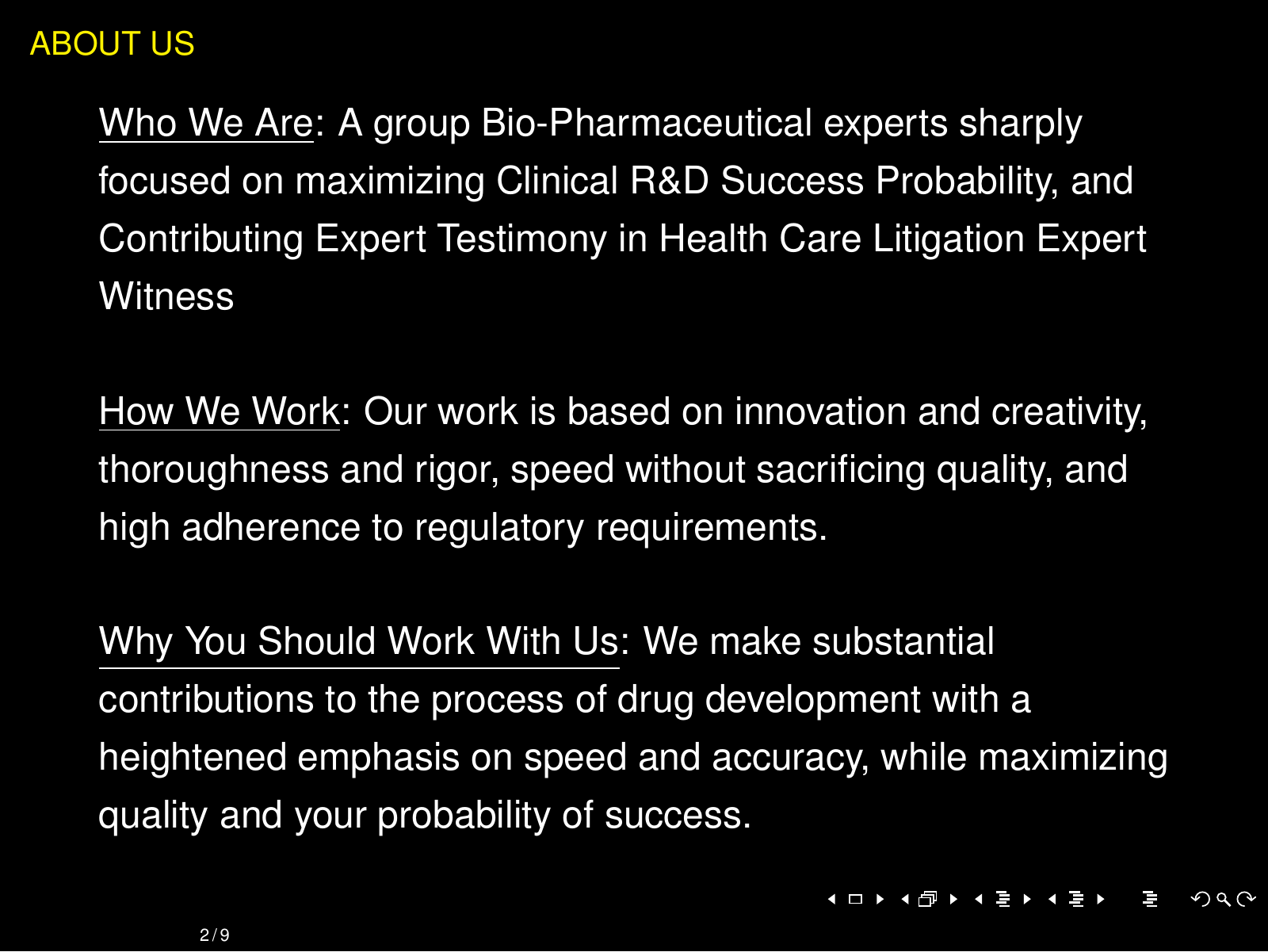
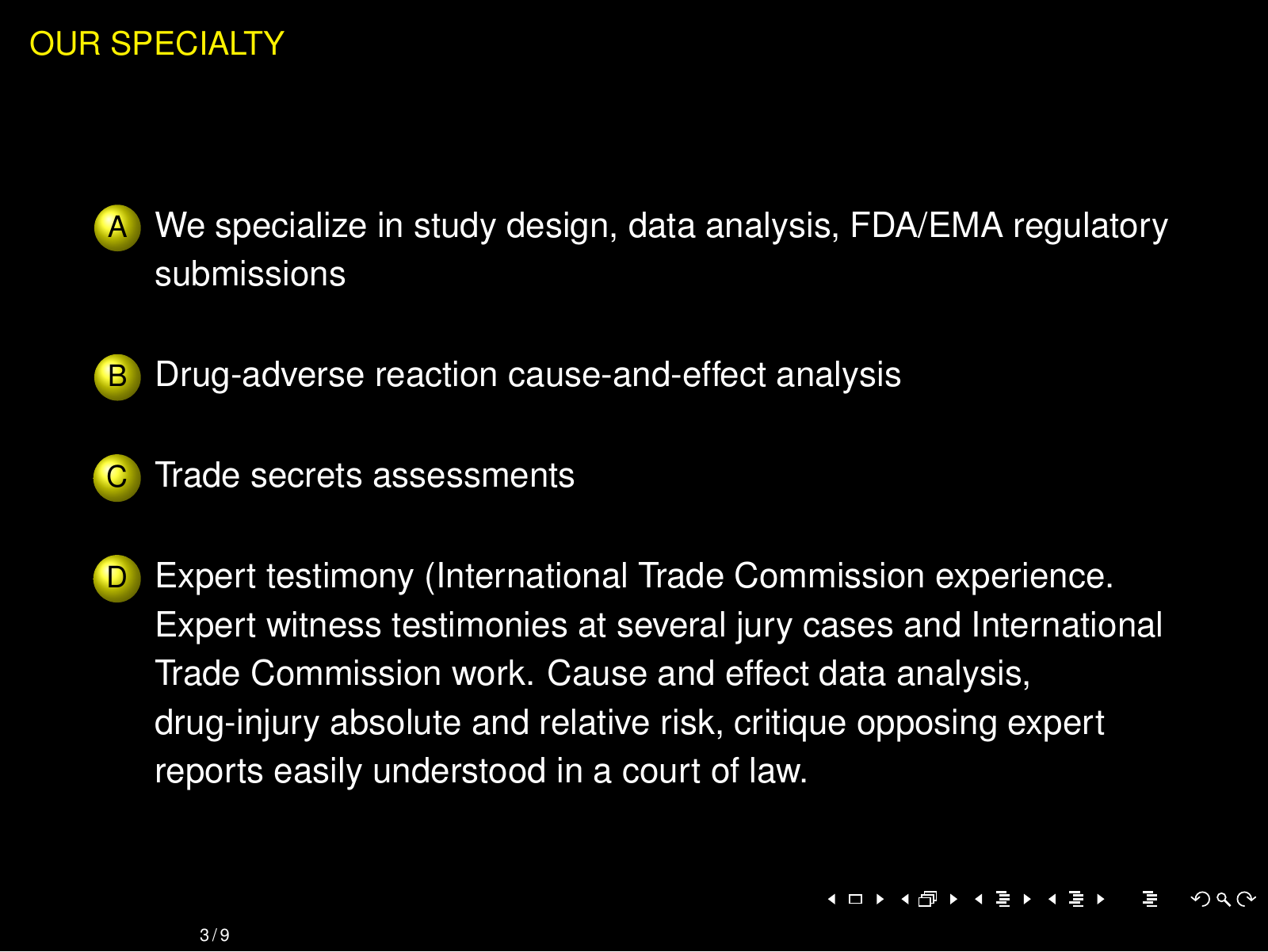
Who we are, how we work, and why sponsors bring us in early.
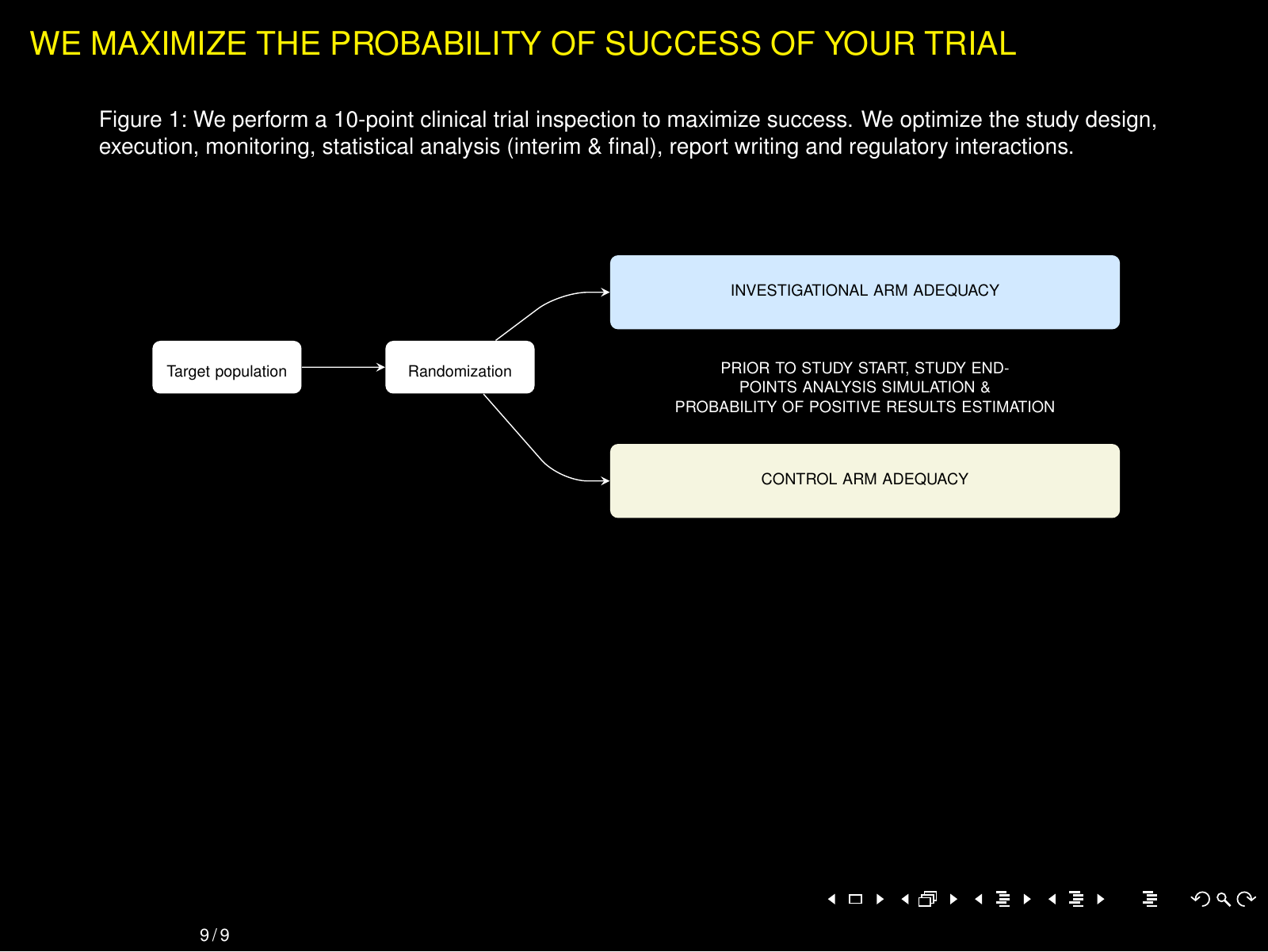
Our expertise enables you to reach your clinical trial’s maximal probability of success by design, quality-monitored execution and pre-specified powerful computer-intensive statistical analyses.
Our software products assist your teams by rapidly turning a study concept into a draft comprehensive document that nails down most of your main protocol sections.
Answer a few questions (such as study objectives, endpoints, study phase and desired design type), then in minutes our StudyDesignChatbot™ hands you the main protocol sections your teams can then use as a starting point to assemble the complete study protocol.
One statistical discipline. Four areas of expertise.
Study design & regulatory submissions
Study design, data analysis, and FDA/EMA regulatory submissions.
Cause-and-effect analysis
Drug-adverse-reaction statistical analysis.
Trade secrets assessments
Statistical analysis of disputed data and documentation.
Expert testimony
Support for International Trade Commission proceedings and jury cases.
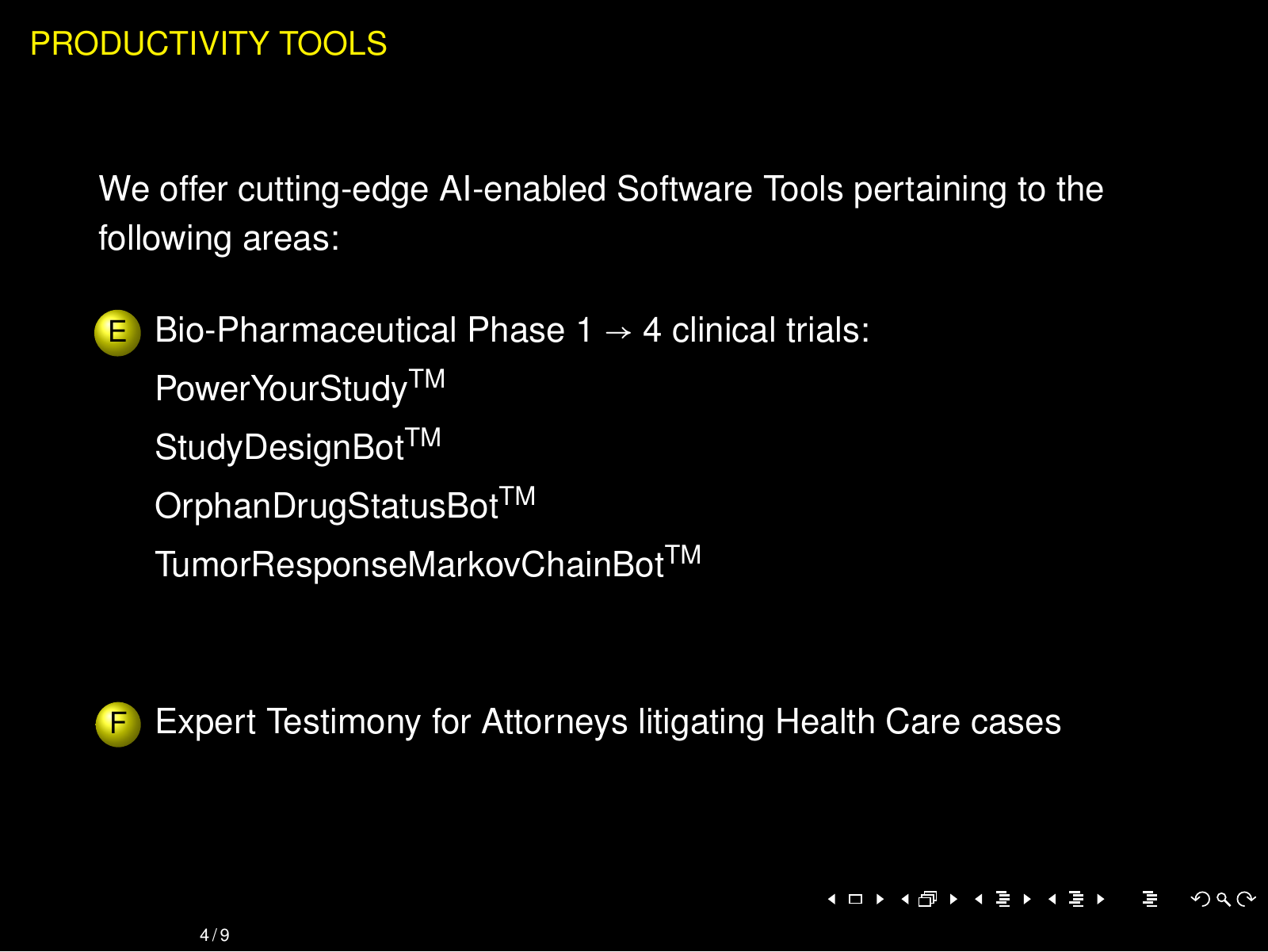
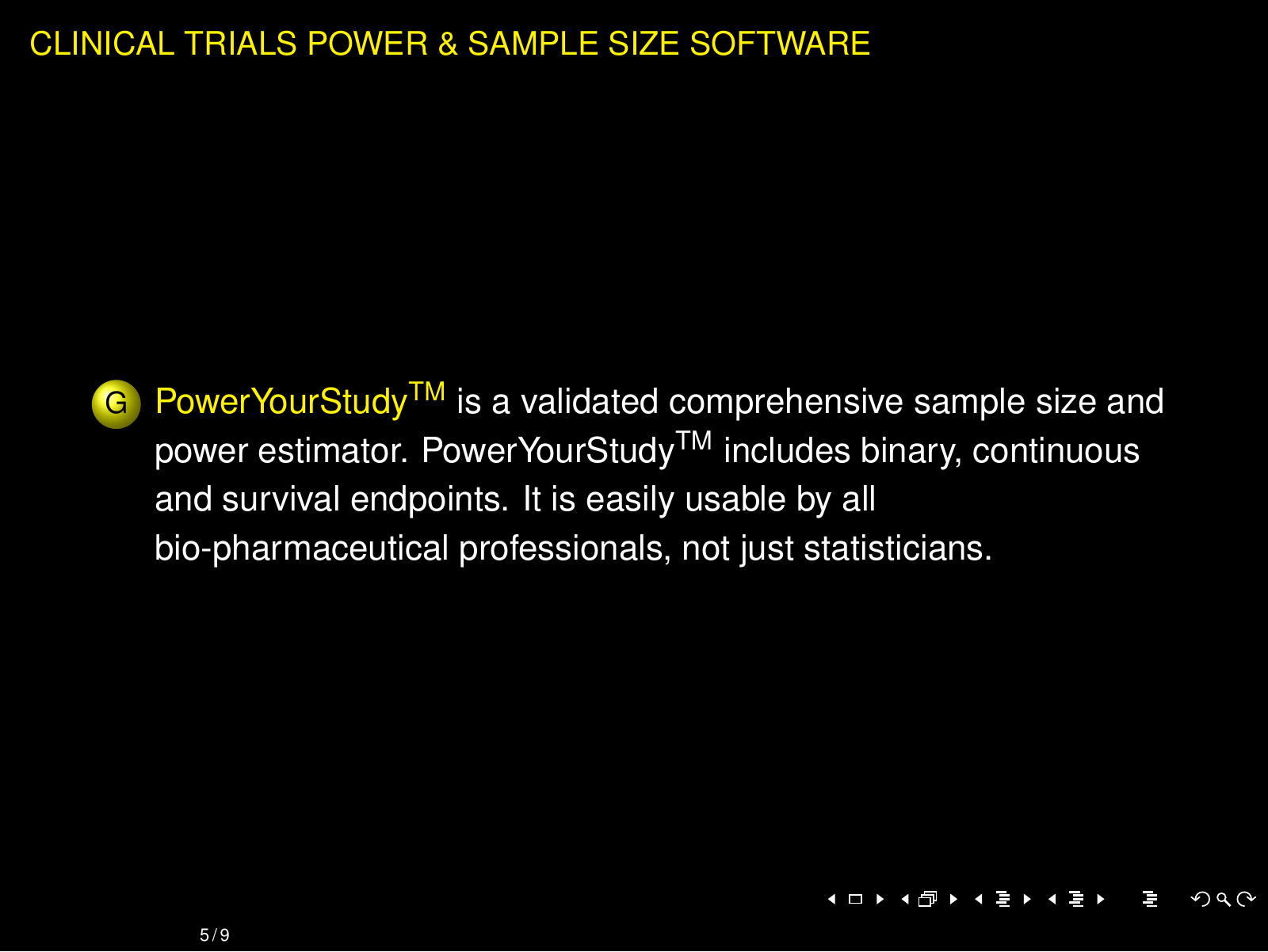
PowerYourStudy™
Easily calculate your study sample size and power, and explore robustness by varying parameter assumptions using PowerYourStudy™.
PowerYourStudy™ provides interactive sample-size calculations for binary, continuous, and survival endpoints, as well as Simon two-stage phase II designs.
Enter your study assumptions to estimate the number of participants or events needed and support protocol planning.
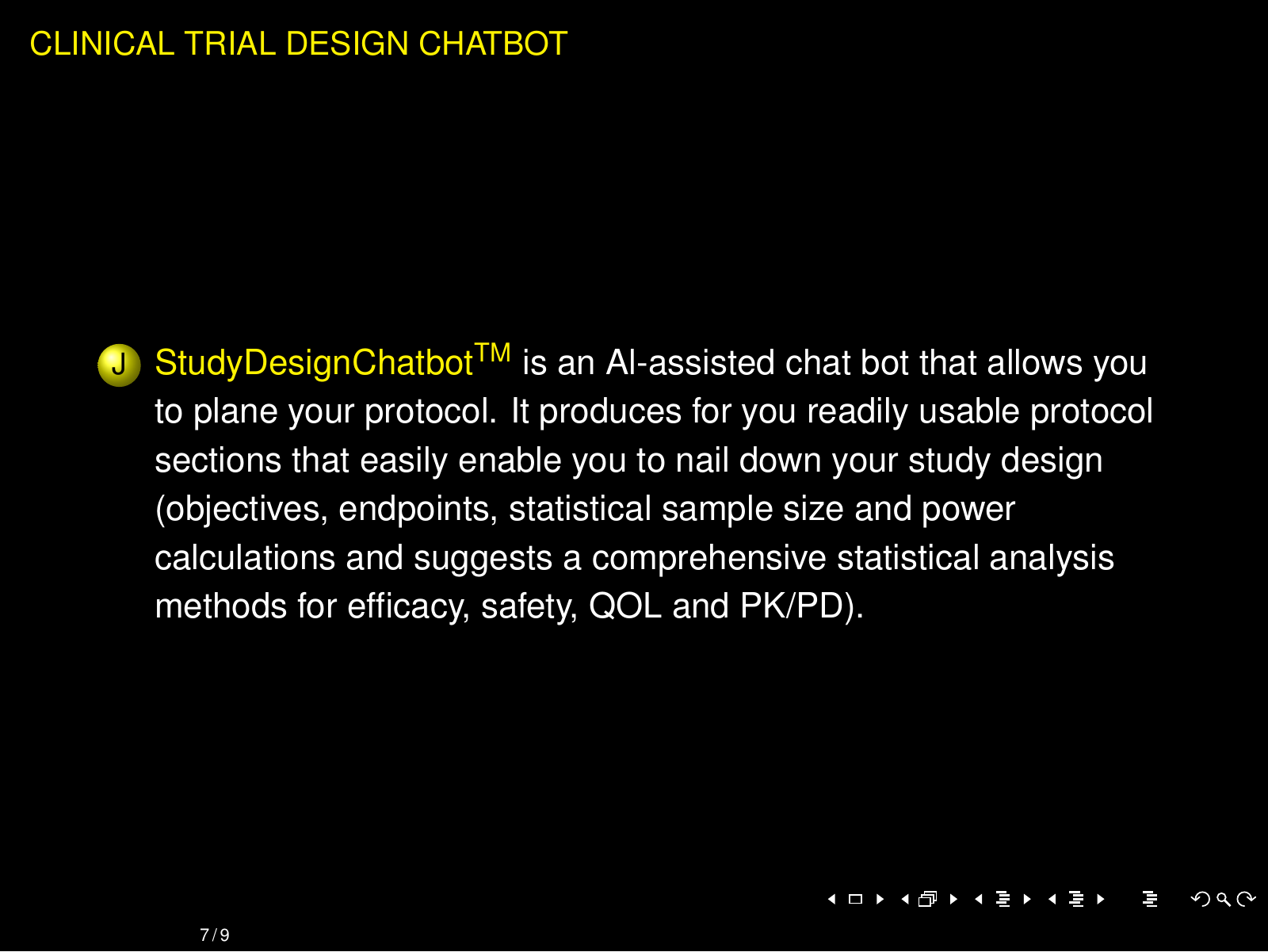
StudyDesignChatbot™
Turn your study concept into a structured plan and produce a first draft of your protocol’s main sections with our StudyDesignChatbot™.
StudyDesignChatbot™ guides you through key design decisions, including objectives, study population, treatment groups, endpoints, and planned interim analyses.
Using your answers, it develops power calculations and tailored statistical-analysis content for primary efficacy and safety endpoints to support protocol development.
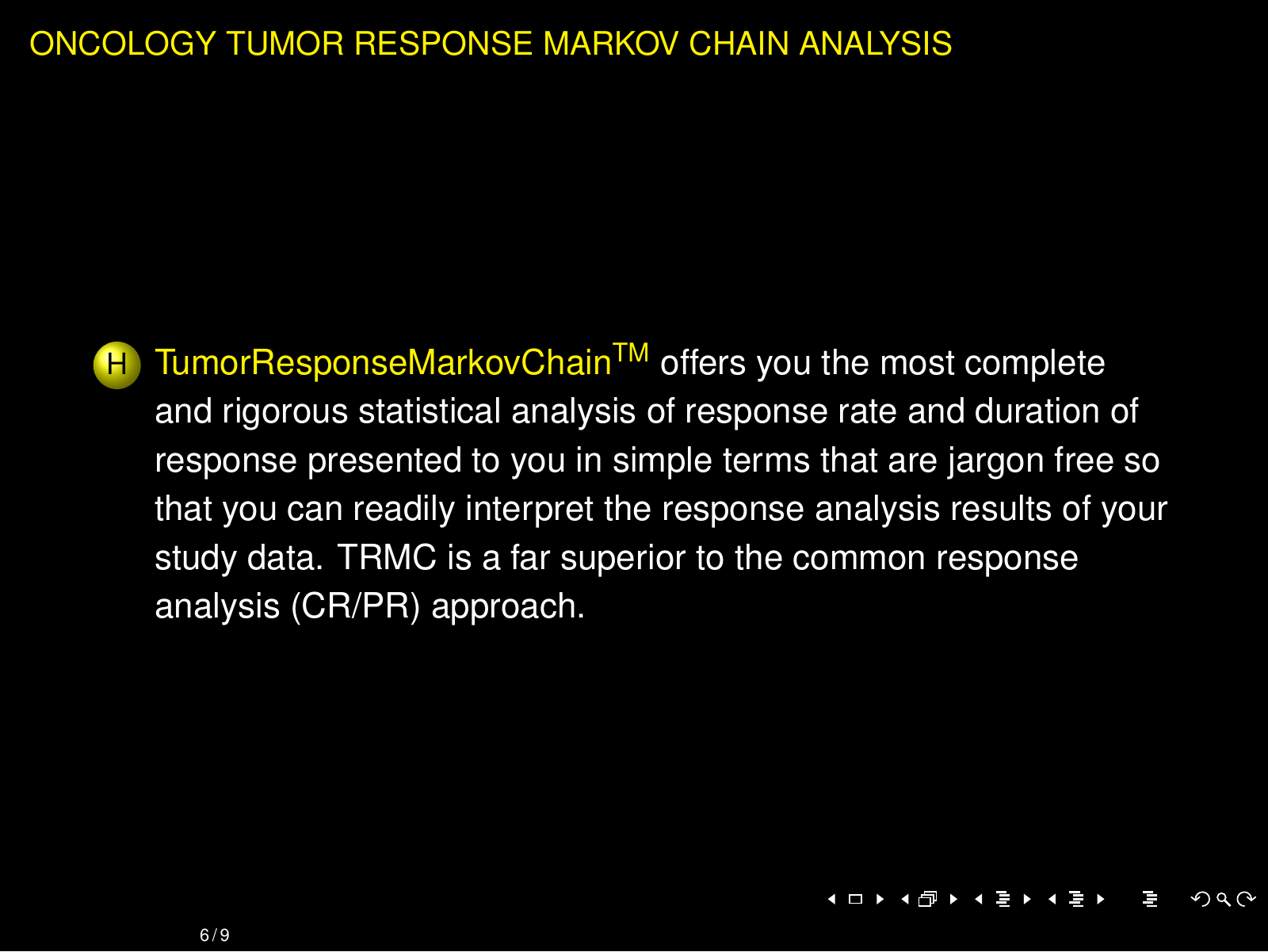
TumorResponseMarkovChain™
The common analysis of tumor response data based on static percentages of Complete Response (CR) or Partial Response (PR) is inadequate and incomplete. Use Markov chains to analyze tumor response data and obtain a dynamic view of how tumor response states change over time and a complete understanding of patient outcomes.
TumorResponseMarkovChain™ helps researchers explore transitions among clinically relevant tumor-response states using a Markov-chain framework.
Define response states and transition assumptions to examine projected response patterns over successive assessment periods and support oncology study planning.
Response states (CR, PR, SD, PD, Death), tracked over time — not summarized away.
A Markov chain models the probability that a patient moves between response states from one assessment to the next, so a study team can see the trajectory behind the topline rate.
State definitions
Response states — Complete Response, Partial Response, Stable Disease, Progressive Disease — defined to match your protocol’s endpoints.
Transition probabilities
Assessment-to-assessment transition rates estimated directly from your study’s response data.
Time-dependent outcomes
A dynamic read on how the patient population moves between states across the full follow-up period.
Regulatory-ready output
Analysis and supporting narrative prepared to the standard a submission demands.
Obtain highly-informative dynamic estimates of your response data with TumorResponseMarkovChain?
Send us your study design and current endpoints, and we’ll walk you through what a Markov chain analysis would look like for your data.
Get in touch →Litigation Expert Testimony
We provide in-depth, comprehensive biopharmaceutical drug-adverse-reaction biostatistical analyses of clinical-trial data pertaining to cause and effect.
We quantify drug–injury statistical associations, estimate absolute and relative risk, thoroughly critique opposing expert reports, and translate complex relative-risk estimates into simple estimates that are easily understood in a court of law.
We also author expert reports, participate in depositions, and issue rebuttal analyses of opposing experts’ reports. We provide expert testimony at trial, assist attorneys in formulating pertinent questions for opposing experts, and help create demonstrables for trial presentations.
Four recurring places statistics meet the law.
From contract and trade-secret disputes to drug and device injury litigation, we provide the statistical analysis and expert testimony that hold up under cross-examination.
Trade secrets analysis
Statistical analysis of disputed data and documentation in trade secret matters.
Expert testimony
Deposition and trial testimony from a statistician who can explain the method as clearly as the result.
Drug & device injuries
Causal and epidemiological analysis in support of drug and medical device injury litigation.
International Trade Commission work
Statistical support for proceedings before the ITC, including Section 337 investigations.
Need an expert who can hold up under cross-examination?
Tell us about the matter and the statistical questions at issue, and we’ll let you know how we can help.
Get in touch →Orphan Drug Status
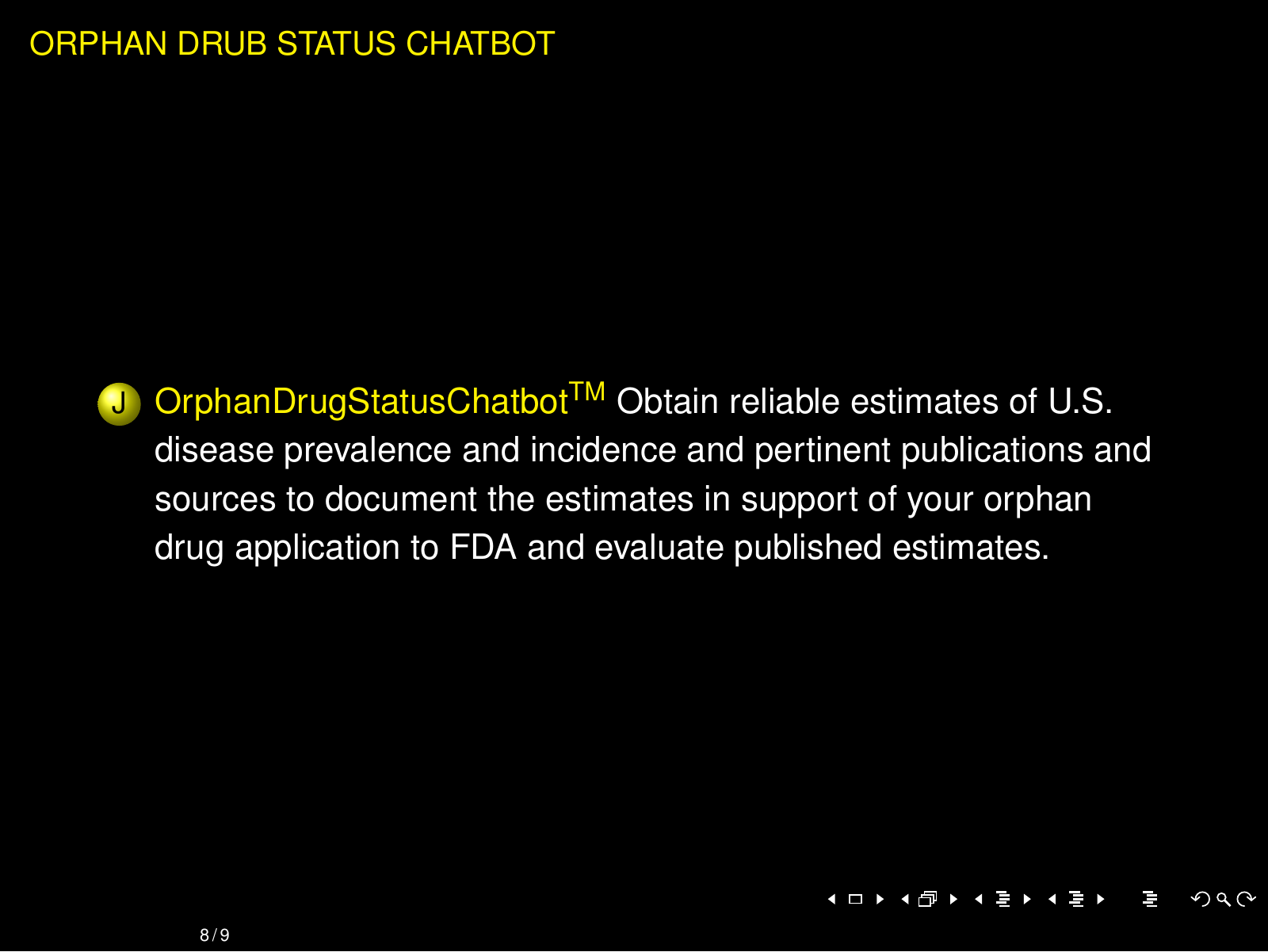
Obtain a reliable estimate of the total number of people in the U.S. diagnosed and living with the disease or condition (prevalence) at the time you’re requesting an FDA evaluation for your orphan drug application.
Contact
Discuss with us your next project and decide how tall our work stands